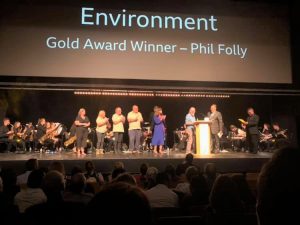
DofE Students Working with CEG

30 September 2025
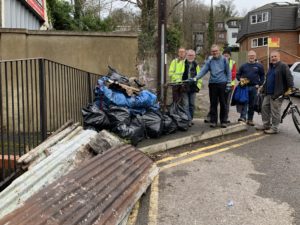
a purple and a blue litter bag lie next to a black public bin

For this quarter’s news item, we asked two students volunteering with us as part of their work towards their Duke of Edinburgh (DofE) Awards to give us their perspectives on working with CEG and litter picking in Chesham.   We hope that this will inspire others.

Here are their stories, in their own words.

Daniel (aged 14): 

I first heard about CEG through my best-friend, Sammi, who joined the group before me, and as volunteering was a key part of my Bronze DofE, I decided to join the group, and start litter picking with them. 

During litter picking, I have found lots of unusual litter throughout Chesham. For example, on one occasion, I looked inside a plastic bag, expecting to find some cans or plastic bottles, however, I found a brand-new pair of shoes, which seemed to have just been left there! 

As I have done litter picking, although many people have just passed by, going about their day, many people have thanked me for litter picking in their area. Although this isn’t the reason why I do volunteer with the group, it is very nice when I feel some appreciation for what I am doing. 

To help with litter, I think that around Chesham more bins could be placed, to encourage people to maintain their area, and to help the environment. Furthermore, I believe that there should be more education about how to reduce litter, not just at school, but through notices, as it isn’t only children that need education about reducing litter.  

Sammi (aged 14):

I first heard about Chesham Environmental Group about a year ago via my parents, who found the group on OurChesham’s Facebook page, from which they informed me about and suggested I join for my Duke of Edinburgh course, which I ended up doing. 

For me, litter picking has been a fairly standard and fine process, one which does not require much time nor hard labour nor thought, making it an easy task to complete. It does also have the added bonus of being able to see the area in which you have helped clean look a large part more pleasant and enjoyable to be in and around. 

Whilst litter picking, I have found various unique objects and trinkets, including a bar beer glass (positioned next to a set of cutlery and a barely used pack of cigarettes), food cans with expiry dates in the early 90s, which fell apart when I touched them, and a packet of bread filled with some object that felt like either a cinder block or chunk of lead. 

During my time of litter picking, I have had many members of the public thank me for my work, whilst passing, or leaning out of the building I was cleaning by. I have also had several people ask how they can also get into the same thing.

I believe a good way of reducing litter is by enforcing littering and dumping laws, and raising fines, in order to nudge people to not commit such acts. As well as this, I believe adding more public bins, and having them emptied more often could help as well, especially in areas such as alleyways and side streets, and especially more in places like parks and other communal areas.  

River Chess Restoration Scheme, Moor Road, Chesham

4 July 2025

A section of the River Chess which runs along the top of Chesham Moor nearby Moor Road has been the subject of a very successful restoration project.

Before the project could start on site, an immense amount of planning and consultation work had to be carried out to ensure all of the appropriate permissions were in place, but after some initial delays, the scheme finally got the ‘green light’, and the ‘all important’ funding. This preparation was steered by Adrian Porter, who is a Chalk Streams Project Officer with the Chilterns National Landscape Team.

The overall purpose of the scheme was:

  • to move the river channel away from the residential concrete boundary wall, over towards the Moor Playing Fields allowing the creation of a new naturalised meandering channel, much more typical of a chalk stream.
  • to replace the existing bridge which provided poor access from Moor Road to the Playing Fields, with a safer, step-free access across the channel for pedestrians and those with mobility impairments.
  • to provide a new sloped access-ramp at the confluence of the restored channel and the main river, creating safer access to the river for families and school groups that frequently use the area to carry out their educational studies about rivers. 
  • to create a sustainable reed-bed drainage pond to intercept poor quality rainfall run-off from the road-side gullies on Bois Moor Road, substantially reducing the risk of pollutants entering the channel.

The site work begins


The Site Work began in Autumn 2024 when the main Contractor, Maydencroft, fenced off the area to ensure that members of the public could not gain access, and it was then that the Chesham Environmental Group (CEG), with its experience in carrying out sensitive river management was asked to get involved in the project.

CEG involvement


The first key task we undertook was to help install wildflower matting impregnated with a large range of wildflower seeds.

This was a revolutionary method which ensured the restoration and maximum biodiversity of the river. Unfortunately, this work was carried during a hot and very dry period and it only survived due to an emergency rota system which CEG operated, involving watering the seeded matting every other day for three weeks to ensure the seeds germinated and become rooted in the riverbank. Perhaps, not surprisingly, Byron set up a spreadsheet where the regular volunteers could sign up to doing as many ‘watering’ shifts as they were able to fit in.

Shortly after the matting was installed Adrian Porter organised the supply of additional wetland species of wildflower ‘plug plants’, including purple loosestrife, marsh skullcap, hemp agrimony, marsh marigolds and hard rush which we added to the riverbank, to compliment the transplanting of yellow flag iris plants from the downstream channel.

The scheme has already settled down well and looks as natural as the design originally hoped would be the case. Well done Adrian!

We are scheduled to help with the removal of the protective chestnut paling fencing later in 2025. It will be rolled up and collected by our Town Council and stored for reuse on other projects.

As with all river related projects, it will be important to carry out sensitive management in the future maintenance programme which Adrian will provide for the CEG team.

First Aid

31 March 2025

Health & Safety. 

We take the health & safety of our volunteers seriously.  With that in mind, we have been working on a Health & Safety Policy which we hope will be formally adopted shortly. This will require us to do some new things at work parties, like sign in.

First Aid kit

First Aid box

We have also replaced our group’s ageing first aid kit.  When I found it in a corner of our tool store and prised it open, I found that some of the “use by” dates for the contents had expired 15 years ago.  You could tell by the yellowing bandages that it wasn’t in the best condition!  We disposed of it, and have now bought St John’s Ambulance first aid kit (shown right) and have mounted it on a bracket inside the tool store, so it is highly visible.  This will be brought to each working party at the same time as we collect our tools.  We have also bought an accident record book, which sits beside the first aid kit, and we sincerely hope that it never needs an entry….

First Aid training

We have checked how many trained first aiders we have among our regular volunteers, and following this, we decided that myself and another CEG volunteer should immediately book ourselves onto a first aid course. This is ensure we know what to do in case a medical emergency arises during one of our work parties (fingers crossed that never happens, but we must be prepared).  The one-day training course was given at a sports venue in Chesham by the charismatic Ian Scott (“Scotty”) of Proactive First Aid Training – which we can thoroughly recommend.

The day kicked off with each trainee introducing themselves to the rest of the class (there were around a dozen of us), and saying which was their favourite film!  This also revealed something about our age, as you could imagine (my choice was 2001 A Space Odyssey, where 2001 was set far in the future when it was originally released in 1968). After this ice breaker, we began a packed day of learning and practical exercises. 

The first half of the day was classroom based, covering many types of injury and illness, with Q&A encouraged after each section to ensure we had taken in everything.  

The second half of the day was more practical based, working in pairs to play the role of casualty and first aider. This included making the incident area safe, assessing the casualty, placing the casualty in a recovery position, enlisting the help of others where possible, making an emergency call, and how to support the emergency services. We also learned how to use equipment such an automated external defibrillator (AED), how to apply CPR and how to administer rescue breathing using a pocket mask.

Following the training, all trainees were sent a certificate with a 3-year validity period, which will serve as a reminder to go on a refresher training course when that time is up!   Additionally, as a reference and reminder of what we had learned on the course, I have invested in the official St Johns Ambulance First Aid Manual (published by DK).

I hope that we never need to make use of our training.  So do take care out there!

Scything Training Day

6 June 2023

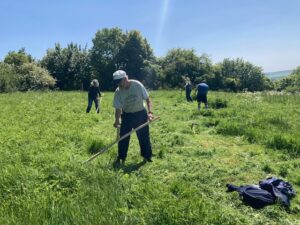
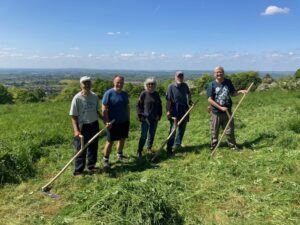
Our Chesham Environmental Group now has another 5 qualified ‘Scythers’ in the shape of Colette Littley, Byron Harding, Alastair Holland, Michael Simpson-Jones and Trevor Brawn following the completion of a training course which was organised by Gavin Johnson at the Chiltern Society, and funded by Steph Horn from the River Chess Smarter Water Catchment Team.

The training took place on Friday 26 May at the Brush Hill Nature Reserve near Monks Risborough and the morning was spent on the key aspects of the different types of scythes, general uses, safe working, setting up, looking after and sharpening the scythes. There was a lot to learn as we received expert guidance from Nicole Clough, who very effectively and enthusiastically covered everything we needed to know, before we had a break for lunch.

We started scything in earnest after our lunch and it was not long before we all began to get the hang of it, and were pleasantly surprised by how well we were all doing. Unfortunately, after about 90 minutes, our time on the reserve had run out, all too soon, so we headed back to the car park to discuss the merits of the day and so that Nicola could show us how to dismantle the scythes and clean them before loading them up for the return journey to Chesham.

We will now be looking for opportunities to use our new found skills to help with the micro-management of areas to increase biodiversity

Thank you to all those that made it possible and who contributed to the success of the day

Trevor Brawn

Our Chesham Environmental Group now has another 5 qualified ‘Scythers’ in the shape of Colette Littley, Byron Harding, Alastair Holland, Michael Simpson-Jones and Trevor Brawn following the completion of a training course which was organised by Gavin Johnson at the Chiltern Society, and funded by Steph Horn from the River Chess Smarter Water Catchment Team.

The training took place on Friday 26 May at the Brush Hill Nature Reserve near Monks Risborough and the morning was spent on the key aspects of the different types of scythes, general uses, safe working, setting up, looking after and sharpening the scythes. There was a lot to learn as we received expert guidance from Nicole Clough, who very effectively and enthusiastically covered everything we needed to know, before we had a break for lunch.

We started scything in earnest after our lunch and it was not long before we all began to get the hang of it, and were pleasantly surprised by how well we were all doing. Unfortunately, after about 90 minutes, our time on the reserve had run out, all too soon, so we headed back to the car park to discuss the merits of the day and so that Nicola could show us how to dismantle the scythes and clean them before loading them up for the return journey to Chesham.

We will now be looking for opportunities to use our new found skills to help with the micro-management of areas to increase biodiversity

Thank you to all those that made it possible and who contributed to the success of the day

Trevor Brawn

Co-op Field Biodiversity Enhancement Project

13 March 2022


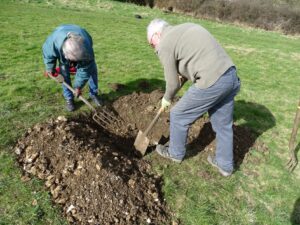
On 9th March 2022, the Chesham Environmental Group joined forces with Chesham & District Natural History Society to start the next phase of the project. The main aim was to prepare more areas and place mats for additional slow worm monitoring around the edge of the field. Then reducing the nutrients in the soil on the surface, by cutting the turf off over a 1.5metres x1.5 metres area, digging down about 500mm to a chalky subsoil, putting the turf in the bottom of the hole and then higher nutrient soil layer next and finally putting the extracted chalky layer on the top. This serves two purposes, by reducing the nutrient level of the soil at the surface creating more suitable conditions for wildflowers and the bare soil will also attract invertebrates in the short term, as bare earth will warm up more quickly than the surrounding grassy areas, so it will become a basking area for invertebrates.

Holloway Lane Flood Prevention

2 December 2021

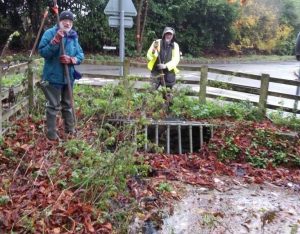
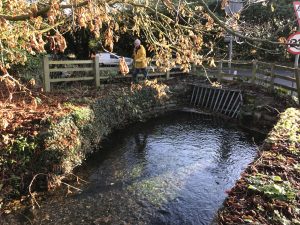
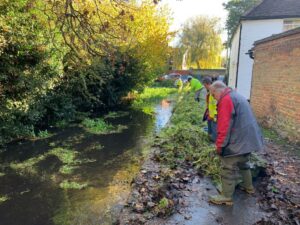
Every year the Chesham Environmental Group visits Holloway Lane to clear the fallen leaves that block the weir under Latimer Road. If left this could result in serous flooding during periods of heavy rain. In November the Group cleared the leaves, removed debris from the river and cut back the vegetation so this delightful part of the river can be seen at its best.

There’ll be more opportunities to make Chesham a better place to live – feel free to come and join us! See our events page for more information.

Working Party Catch Up

8 July 2021

Since restarting our work party programme, we have been very busy clearing the river Chess in Meades Water Gardens and around The Moor. We’ve also been clearing litter in Captains Wood and tackling the footpaths around Millfields. We’ve been delighted with the numbers of volunteers that have turned out after the various lockdowns and pleased to see a number of new faces.

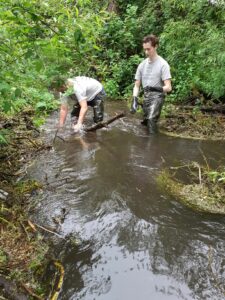
Ben and Archie clearing the log jam on the Canon’s Mill bypass. This has been blocked for quite sometime and the challenge now is to keep it clear.
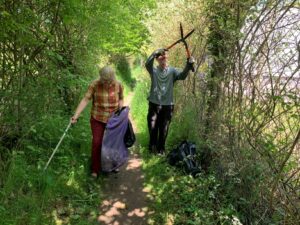
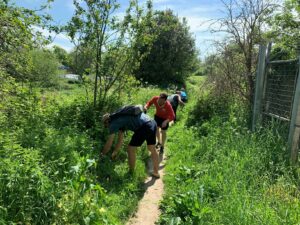
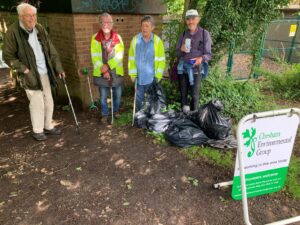
The footpaths around the Millfields area had got very overgrown and full of litter.

A very useful morning was spent litter picking in Captains Wood. We have been visiting this site for many years and it’s looking very good. Part of this is down to local residents who pick litter while out walking.

We’re Back

21 April 2021

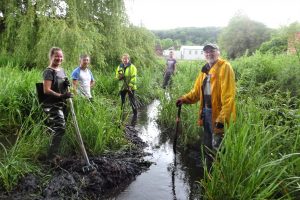
At last we’re back! We spent a beautiful Sunday morning clearing the River Chess at Moor Road and litter picking the surrounding area. There were around a dozen of us working and taking the opportunity to chat about our work to the local residents. Fancy joining us next time? Please just turn up – no sign up required. All welcome.

Clearing the Weed in Water Lane

6 November 2020

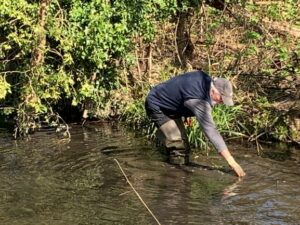
On Wednesday 4th November, we joined local residents to help clear the River Chess of invasive weed thereby reducing the risk of flooding. Over the last few years we have had a major project in place to clear the river of obstructions, including weeds, all the way from The Queens Head to beyond Canon’s Mill.

There’ll be more opportunities to make Chesham a better place to live – feel free to come and join us! See our events page for more information.

Restarting Our Work Parties

26 July 2020

We are delighted to announce that as of Sunday 16th August, we will be restarting our work parties. Our first task will be clearing Meades Water Gardens and Duck Alley of invasive vegetation and litterpicking the local area. We intend to follow Government guidance on Covid-19 to ensure both our members and the general public are kept safe. Further work parties will be announced later.